
Latin America has undergone a relatively recent but intense democratisation process, shaped by colonial legacies and decades of authoritarian rule. Most countries only transitioned to democracy at the end of the 20th century, and public trust in democratic institutions remains fragile. Like other countries worldwide, the region is witnessing a growing democratic backsliding.
By Max Vyskubov and Itzel Riba
According to Civicus Monitor, around one-third of people in the Americas live in countries where civic space is closed or severely restricted. Attacks on journalists, violence against human right defenders, arbitrary detentions, and repression of protests are widespread. Mexico reflects these dynamics: activists fighting for environmental protection, indigenous rights, and social justice often face threats and intimidation.
In the Mexican context legislation offers various participatory mechanisms, however it is not homogeneous, there is limited access to information and a lack of binding and accountability mechanisms. These challenges result in top-down logic or poorly implemented mechanisms, creating a gap between democratic potential and lived reality. Nonetheless, grassroots movements - often working independently - continue to mobilise creatively, defending people’s rights and pushing for sustainable, community-driven change.
This raises key questions: How can participatory mechanisms be more transparent and accessible for communities? What type of support network is needed to strengthen people's power while also protecting those engaged in civic action?
To address these needs, a Latin-American network for participatory democracy is essential. Such a platform would connect grassroots actors and foster exchange of knowledge and strategies. It would strengthen cooperation, amplify voices and, importantly, enhance communities’ capacity in claiming space in democratic and policy-making processes.
Workshop: Sharing about Participation in Everyday life
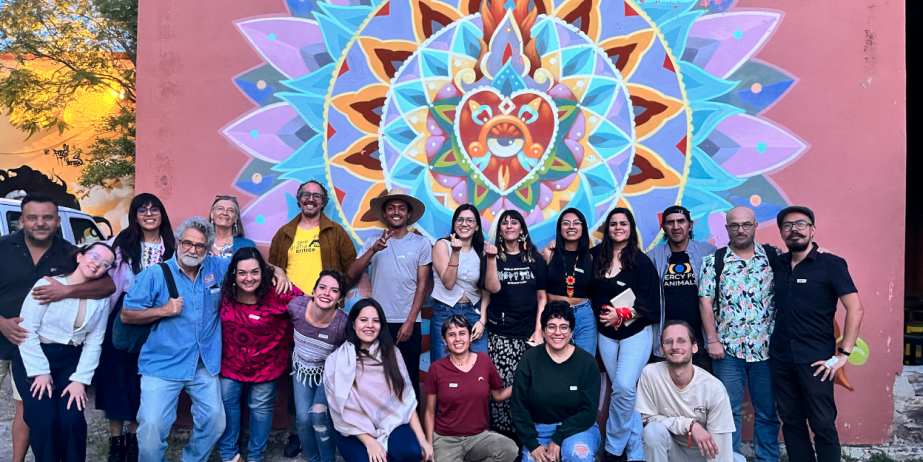
As part of the ASA-project and one of the first steps to build this network, Democracy International, in collaboration with Mar de Fueguitos, hosted a workshop in San Miguel de Allende, Mexico called “Sharing about participation in everyday life”. Mexican organisations, collectives, and associations came together to exchange ideas about participatory mechanisms and to develop strategies for future cooperation based on their own experiences.
The workshop focused on creating a safe and collaborative space where participants could share their experiences, learn from one another, and explore ways to support each other in their ongoing efforts.
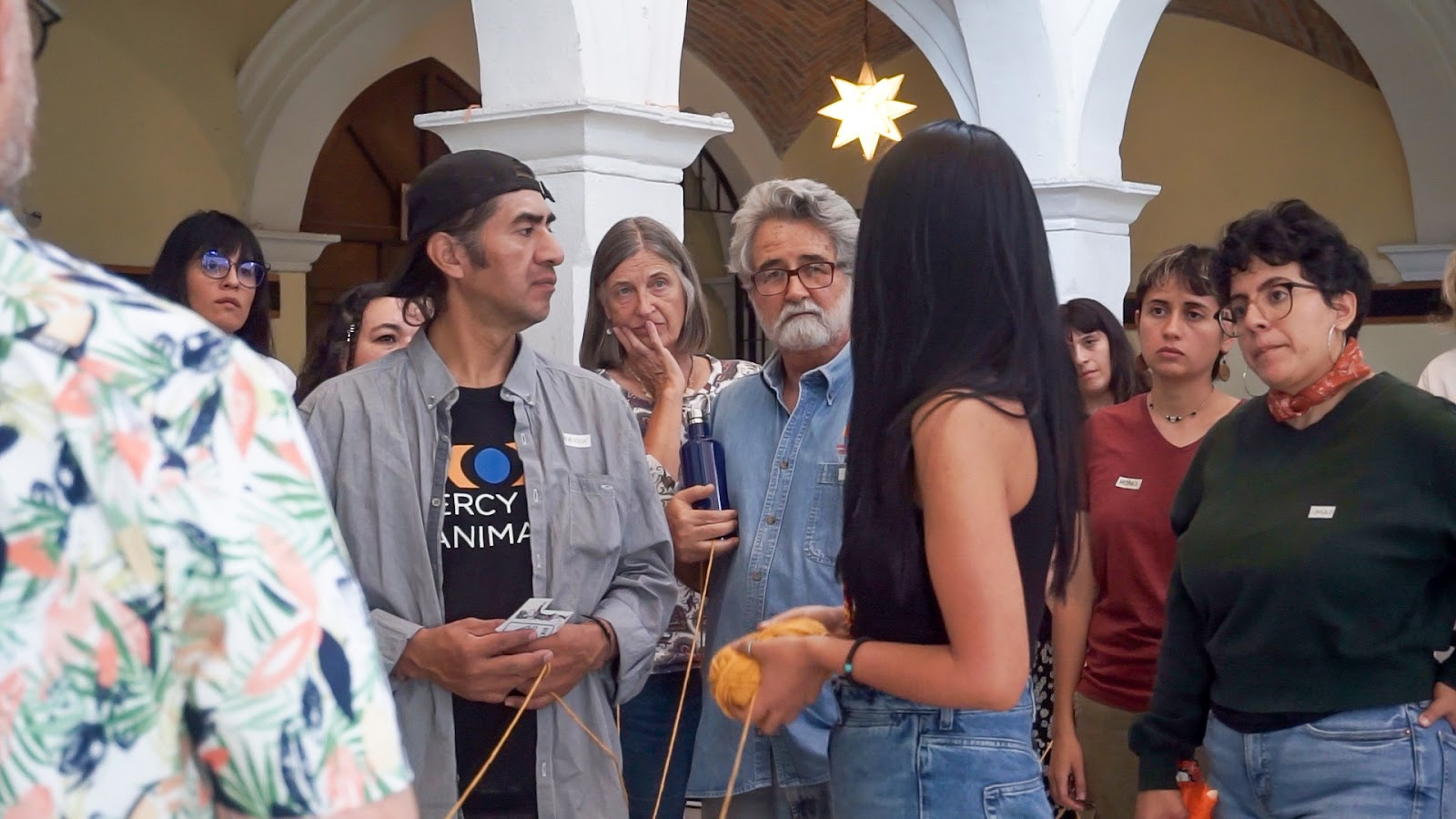
The event began with a creative activity where participants were asked in advance to consider which object best represented them and what it revealed about how they build networks within their communities. In the event room, a human silhouette made of wool was laid out, and participants were invited to assign their story to a specific part of the body. A common thread quickly emerged. Many participants shared stories about what inspired them to work in their respective fields, revealing that intrinsic motivation to stand up for their communities was a unifying factor across the group.
Following the activity, presentations were given by three organisations, each sharing their experiences with participatory mechanisms. Yasunidos from Ecuador shared their success in protecting the Amazon rainforest with a 10 year project, resulting in a referendum in 2023. The collective Un Río en el Río described how they prevented the local government in Monterrey from building a highway across the city’s river. Finally, a representative from Netas Ciudadanas spoke about their work in Querétaro to promote citizen participation through digital activism.
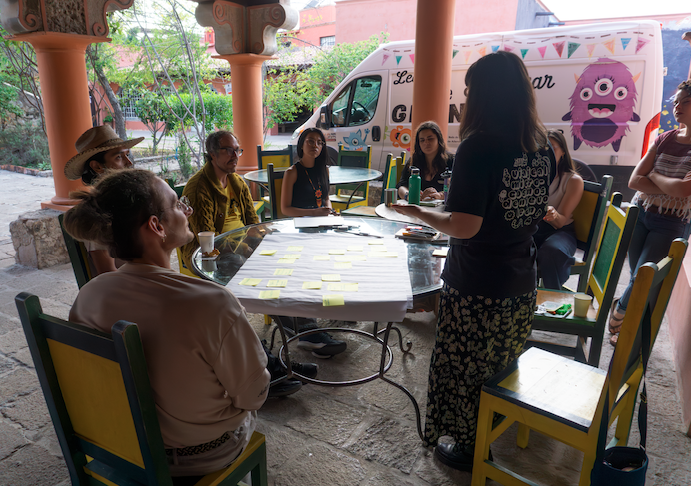
The workshop then moved into its core component, where the speakers facilitated small group sessions. Together with the participants, they shared experiences and expertise, and worked on developing concrete strategies for future collaboration. Discussions were lively, with participants expressing interest in both personal and collective engagement in civic spaces.
The outcomes of these sessions, discussed in plenary at the end, were particularly impressive. The participants defined collective agreements to strengthen collaboration, knowledge exchange, and ongoing support.
Strengthening networks and communication: Participants committed to extending connections beyond their own states, fostering links between individuals and collectives across regions. To facilitate ongoing communication, they agreed to maintain contact for sharing information, supporting individual connections, and making workshop materials accessible via a cloud-based platform.
Meetings and spaces for exchange: The group planned regular virtual meetings to follow up on topics discussed during the workshop, including digital participation and local laws.
They also emphasized exchanging experiences and calls for action while reflecting on the limits of participation, recognizing challenges to set realistic commitments.
Leveraging knowledge and capacities: Participants agreed to identify and utilize diverse skills present within the group, including legal, technical, and community expertise. They proposed creating a map of needs and capacities to clarify how each person or group could support others, coordinated by a “digital mapping committee.”
In the medium term, further workshops on network building will be held in Mexico, conducted by the participants from the first workshop along with the organizations that hosted this first workshop. The long-term vision is to expand the network across several Latin-American countries to benefit from diverse perspectives and experiences.
The foundation for building the Latin-American network has been laid, and now it’s time to bring these ideas and plans to life.
