Artikel verfasst von
Caroline Vernaillen
Lead Global Policy & Advocacy
vernaillen@democracy-international.org

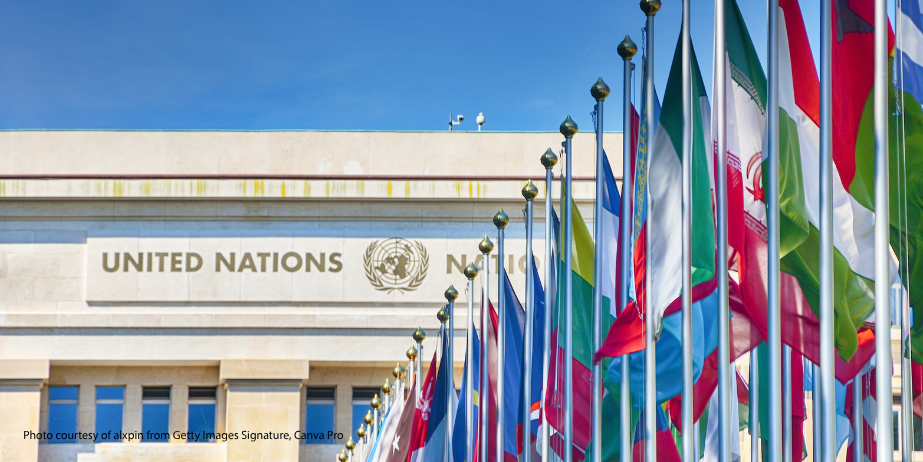
Die Vereinten Nationen wählen ihren nächsten Generalsekretär in einem Moment, der vielleicht der heikelste in ihrer Geschichte ist. Dieser Prozess offenbart etwas Unangenehmes über die Institution, die der erfolgreiche Kandidat übernehmen wird: Die UNO hat gelernt, die Menschen zuschauen zu lassen, aber noch nicht, sie mitwirken zu lassen.
This week, world leaders descend on New York for the United Nations General Assembly. In corridors, receptions and closed meeting rooms, one question will hang over almost every conversation: who will be the next Secretary-General of the United Nations?
The more important question, however, is “Why do the world's eight billion people have no say in the answer?”
The formal process is straightforward. Governments nominate candidates. Candidates publish vision statements and CVs and appear before the General Assembly. Then the fifteen members of the Security Council hold a series of (officially) secret "straw polls", voting in favour, against or abstaining. To gain a formal recommendation of the UNSC, a candidate needs 9 votes in favour. Eventually, the Council recommends one name to the General Assembly, which appoints the Secretary-General.
But there is a catch. Any one of the five permanent members of the Security Council — China, France, Russia, the United Kingdom and the United States — can veto a candidate. By the time the name reaches the General Assembly, the real choice has already been made.
In other words, the leader charged with representing all of us, peoples of the United Nations, is selected through closed-door negotiations dominated by five governments. That system belongs to another century.
Transparency without power
To its credit, the UN has tried to open the process. Since 2016, candidates publish vision statements and now, for the first time, also campaign-financing disclosures. They have faced public interactive dialogues in the General Assembly, where civil society has been able to submit questions.
This year even brought a televised "UN Town Hall", gathering the candidates in the General Assembly Hall before the Security Council began its straw polls in July. The UN described it as an important advance in transparency, accountability and public engagement.
But we should not confuse watching a selection process with participating in one. The Town Hall gave the public a window into the race. It did not give people any meaningful influence over its outcome. Neither do the interactive dialogues.
Once the public-facing part of the process finishes, the doors close again and the decisive bargaining moves to the Security Council. Transparency and consultations are valuable, but they are not the same as democracy.
The UN is fighting for its future
The next Secretary-General will not inherit a comfortable institution in need of minor modernisation. They will inherit a United Nations fighting for its relevance — and its existence.
The financial situation alone is extraordinarily dire. Assessed-contribution arrears to the UN Secretariat almost doubled from $3.4 billion in 2022 to $6.6 billion by April this year. Core funding across the UN system is declining. Staffing has been cut. Peacekeeping operations have been halted due to the financial constraints. This summer, the General Assembly had to change a 75-year-old financial rule to avert what its President called the imminent financial collapse of the organisation.
At the same time, the UN80 reform process is asking fundamental questions about what the institution does, what it can afford to do and how it should be structured.
And all of this is happening while the problems requiring global cooperation are becoming more, not less, existential: climate breakdown, war, artificial intelligence, pandemics, nuclear proliferation, inequality and democratic decline. This is an explosive combination.
Informal, ad-hoc forums of global governance are stepping up to fill the vacuum. But they present serious practical and moral issues. Earlier this year, Donald Trump's "Board of Peace" offered one particularly bleak vision. Its model concentrates extraordinary authority in its chairman (Mr. Trump personally) and allows states to buy a seat at the table by making a billion-dollar contribution. It presents force and money as substitutes for diplomacy and cooperation. This is exactly the wrong lesson to draw from the UN's failures.
The choice is not between an ineffective multilateral system and an efficient club of powerful states and wealthy interests. Global governance can be made faster and more effective. But efficiency cannot come at the expense of legitimacy.
It’s good to remind ourselves that the UN remains a trusted and respected institution to most of the world’s citizens, but one that is too far from the people it serves. The challenge lies in bringing decisions closer to the people who must live with their consequences.
Citizen participation is no longer a nice-to-have
For decades, citizen participation in global governance has been treated as something peripheral: invite civil society to a consultation, livestream a meeting, hold a stakeholder dialogue. That is no longer enough.
As we face increasingly daunting global problems, people are and will be asked to accept far-reaching decisions on climate, conflict, migration, technology, health and economic. Yet the democratic mechanisms available to them remain overwhelmingly national. If we take into account that less than half of the Member States of the UN can be considered democracies, this presents an enormous problem.
There is no democratic infrastructure connecting ordinary citizens directly to global decision-making. That gap is dangerous. If people experience international institutions as distant places where governments negotiate rules behind closed doors, defending those institutions becomes untenable. And when multilateral institutions lose public legitimacy, the vacuum will not necessarily be filled by something more democratic. The Board of Peace shows the way already: international governance based on money, power and personal connections.
This is why citizen participation is not icing on the cake of multilateralism. It is part of its survival kit.
There are concrete ways to begin:
A UN World Citizens' Initiative could allow people across countries to place an issue formally on the UN agenda. A UN Parliamentary Assembly could introduce a representative democratic dimension alongside governments. A UN Civil Society Envoy could create a permanent institutional bridge between the UN system and organised civil society. Citizens' assemblies and deliberative processes could bring ordinary people directly into debates about questions whose consequences cross national borders.
None of these ideas would replace Member States. They would complement them.
They simply start from a principle that should not be radical in 2026: people affected by decisions deserve meaningful opportunities to influence them.
So what do the candidates say?
We examined the candidates' public positions against five questions: their commitment to open global governance; their proposals for citizen participation; their openness to civil society; their ambition for UN reform; and their democratic track record. There is much to welcome: Rebeca Grynspan presents an unusually strong case for transparency, accountability and civil-society partnership. María Fernanda Espinosa speaks compellingly about meaningful participation and inclusive global governance. Carolyn Rodrigues-Birkett emphasises a people-centred United Nations. Olara Otunnu talks of connecting "the Global" with "the Community". Ivonne A-Baki proposes ambitious structural reforms to the UN itself.
But across the field, one gap is striking.
Candidates repeatedly promise to listen to people. To consult civil society. To engage youth. To make the UN more people-centred.Very few explain how people might actually acquire power.
Where is the right of citizens to put an issue on the UN agenda? Where are permanent mechanisms for citizen deliberation? Where is democratic representation beyond governments? Where is the commitment to ensuring that civil society participation does not depend on the goodwill of Member States? The next Secretary-General should answer those questions.
And yes, it is time for a woman
There is another fact about this selection that becomes increasingly difficult to ignore: In more than eighty years, the United Nations has never had a woman Secretary-General.
No one should become Secretary-General because she is a woman. The job is too important for that. But look at the women who have put themselves forward: Former vice-presidents, foreign ministers, presidents of the General Assembly, senior UN leaders, diplomats and international negotiators. Women with decades of experience navigating development, diplomacy, multilateral institutions and political leadership.
Then consider what the existing system is prepared to overlook elsewhere.
One male candidate has continued to lead a major international agency while campaigning for the Secretary-Generalship, despite obvious questions about the separation between institutional responsibilities and political campaigning. Another brings a domestic record that includes serious concerns over restrictions on opposition, protest and civic space, as well as an attempt to postpone a presidential election that was overturned by his country's Constitutional Council.
We are past asking if the world is "ready" for a woman Secretary-General. But electing the first woman Secretary-General cannot mean handing her an institution on the verge of collapse. We can’t congratulate ourselves for breaking a glass ceiling just as we push her off a glass cliff.
She — whoever she may be — must be given the political space, resources and mandate to lead genuine reform. And genuine reform cannot mean only doing the same things with fewer staff and less money. This is the Member States’ urgent responsibility – especially that of the democratic ones and the so-called “Middle powers”.
Who is the people's candidate?
So let’s stop asking the wrong question during High-Level Week.
It’s not about which candidate Washington supports, whom Moscow might veto. It’s not a global popularity contest. We should ask: Who is the people's candidate?
Who is willing to say that the legitimacy of the United Nations cannot rest indefinitely on diplomatic negotiations among governments alone? Who understands that opening a Town Hall is a beginning, not an achievement? And who is prepared to give citizens something more consequential than a microphone for ninety minutes every ten years?
The United Nations was created in the name of "We the Peoples".
Eighty-one years later, perhaps it is finally time to let the people in.
So choose your fighter, get to know who will be fighting for us in the UN.
Rebeca Grynspan — 22/25
Electoral viability: HIGH, but weakened
Latest reported straw poll: Pro: 7 / Contra: 4 / Abstention: 4
First poll: P:10 / C:1 / A:4
Open global governance — 5/5
One of the clearest candidates on transparency and accountability. She explicitly describes the UN as facing a legitimacy crisis, argues that it must be accountable not only to governments but to people, and identifies accessibility, transparency and responsiveness as hallmarks of her approach.
Citizen participation — 3/5
She strongly embraces a people-centred UN, but there is an important ceiling. Citizens are principally people the UN should listen and respond to, rather than political actors given new institutional rights. No World Citizens’ Initiative, Citizens’ Assembly or comparable proposal.
Civil society — 5/5
Among the strongest candidates here. She makes a substantive case for civil-society partnership rather than treating NGOs as an afterthought, and has shown openness to restoring a dedicated civil-society engagement mechanism within the Executive Office of the Secretary-General. She also signed the 1 for 8 Billion integrity principles.
UN reform — 5/5
Ambitious and unusually detailed: streamline structures, align mandates and budgets, introduce clearer metrics and public reporting, strengthen independent evaluation, improve merit/geographical balance in appointments, address structural financing and pursue a more representative Security Council. This goes beyond simply making the bureaucracy cheaper.
Democracy record — 4/5
Strong democratic and inclusive-governance credentials. Former Vice-President of Costa Rica - a country with a longstanding tradition of competitive democracy and peaceful transfers of power. Consistently linked democracy with social inclusion, gender equality and reducing inequality. Senior leadership at UNDP - at the heart of international work on democratic governance.
Bottom line: The strongest combination of open governance, civil society and serious institutional reform—but still stops short of giving citizens formal political power at the UN.
Michelle Bachelet — 22/25
Electoral viability: LOW
Latest: P:2 / C:6 / A:7
First poll: p:6 / C:5 / A:4
Open global governance — 5/5
Strong emphasis on transparency, accountability, accessibility and reconnecting the UN with people. Her vision combines institutional effectiveness with legitimacy rather than treating reform solely as a managerial exercise.
Citizen participation — 3/5
Strong people-centred language, but again the missing ingredient is institutionalised citizen power. She doesn't offer a clear mechanism through which citizens themselves could initiate issues, deliberate formally or acquire a permanent place in global decision-making.
Civil society — 5/5
Her UN human-rights background and public positions give her very strong credentials here. She signed the 1 for 8 Billion integrity principles and has a long record of engagement with rights defenders and civil society.
UN reform — 4/5
Strong on effectiveness, accountability, accessibility and modernisation. She also stands out for supporting the idea of a single term for the Secretary-General, which would reduce re-election incentives. Less institutionally transformative than the most ambitious reform proposals in the field.
Democracy record — 5/5
Former democratically elected President of Chile, first Executive Director of UN Women and former UN High Commissioner for Human Rights. Among the field, she has one of the clearest sustained records connecting political leadership, democracy, women's rights and human rights.
Bottom line: Exceptionally strong democratic and human-rights credentials, but—like Grynspan—participatory governance still means considerably more engagement than citizen power.
María Fernanda Espinosa — 17/25
Electoral viability: LOW–MEDIUM
Latest: P:4 / C:3 / A:8
First: P:5 / C:2 / A:8
Open global governance — 4/5
She explicitly diagnoses a credibility problem and advocates a more inclusive, responsive and locally connected multilateral system. Strong language, although less institutionally specific than Grynspan and Bachelet. She signed the 1 for 8 billion pledge.
Citizen participation — 3/5
She gets closer than many candidates. She argues participation must go beyond box-tickingand links implementation failures to insufficient local ownership. Her proposed dialogue on emerging technologies would include civil society and other non-state actors. But she doesn't translate that principle into formal citizen rights or agenda-setting powers.
Civil society — 4/5
Her own civil-society background matters, and she speaks unusually positively about civil society as a partner and co-owner. The limitation is important: when asked about participation in intergovernmental processes, she acknowledges that the terms ultimately remain in Member States' hands.
UN reform — 3/5
Strong on operational and financial reform. Espinosa calls for a leaner, less bureaucratic and more decentralised UN, with substantial changes to financing and resource allocation. Her proposals are less developed when it comes to changing the UN’s underlying governance structures or distribution of political power.
Democracy record — 3/5
Mixed but substantial record. Espinosa has a long track record on inclusive governance, Indigenous rights and gender equality, including as President of the UN General Assembly. However, she also held senior positions under Rafael Correa as his government increasingly restricted media freedom and civic space. There is no basis to attribute those abuses personally to Espinosa, but her role in that administration weighs against a higher score.
Bottom line: One of the better candidates on meaningful participation in principle; the institutional mechanisms to turn participation into power remain missing.
Carolyn Rodrigues Birkett — 16/25
Electoral viability: HIGH
Latest: P:8 / C:3 / A:4
First: P:9 / C:2 / A:4
Open global governance — 4/5
Strong people-centred emphasis on openness, accountability and representation. She pledged to uphold the 1 for 8 Billion Principles for Integrity and was the first candidate to publish an updated campaign-finance disclosure, reinforcing her transparency credentials.
Citizen participation — 2/5
Strong people-centred language, with particular emphasis on meaningful youth engagement and ensuring excluded voices are heard. Rodrigues-Birkett presents young people and communities as partners in the UN’s work, not simply beneficiaries. However, her proposals remain largely consultative: she does not set out permanent mechanisms through which citizens could initiate, deliberate on or directly influence UN decisions.
Civil society — 3/5
Positive about civil-society involvement and stakeholder engagement, but when pressed she emphasizes that Member States ultimately determine participation in intergovernmental processes.
UN reform — 3/5
Supports UN80 and better implementation, representation and accountability, but tends toward making the existing system work better rather than substantially redistributing institutional power.
Democracy record — 4/5
Strong record on inclusive governance and Indigenous rights. As Minister of Amerindian Affairs, Rodrigues-Birkett worked on strengthening Indigenous land rights and local self-governance, and she brings substantial parliamentary experience. She later represented Guyana in international human-rights scrutiny through the UN's Universal Periodic Review. Her record is strongest on inclusion, Indigenous self-government and representation rather than on broader democratic-system reform.
Bottom line: Currently the strongest Security Council performer, but much more cautious about democratising the UN than the electoral ranking might suggest.
Ivonne A-Baki — 16/25
Electoral viability: VERY LOW
Latest: P:0 / C:8 / A:7
Open global governance — 4/5
Strong on legitimacy, representation, transparency and bringing excluded regions and younger generations more meaningfully into global governance.
Citizen participation — 2/5
She says young people must be brought in as a matter of legitimacy, but provides little architecture for how citizens would participate in actual decisions.
Civil society — 2/5
Civil society is not nearly as developed a component of her platform as it is for Grynspan, Bachelet or Espinosa.
UN reform — 5/5
One of the boldest institutional reform programmes: greater permanent Security Council representation for excluded regions, action on the veto, mandate sunset clauses, back-office consolidation, measurable performance and financial transparency.
Democracy record — 3/5
Genuine electoral and parliamentary credentials. A-Baki ran for Ecuador's presidency in 2002 and was subsequently elected to the Andean Parliament, serving as its President from 2007–09. Her career also includes significant peacebuilding and cross-party diplomatic experience. But there is less evidence of a sustained personal record championing democratic reform, civic space or participatory democracy.
Bottom line: One of the most ambitious institutional reformers—but reforming relations among states is not the same as democratising relations between the UN and citizens.
Olara Otunnu — 16/25
Electoral viability: MEDIUM / RISING
Latest: P:5 / C:5 / A:5
First: P:2 / C:5 / A:8
Open global governance — 4/5
His framing—connecting “the Global” to “the Community”—is particularly compatible with citizen participation concerns. He stresses that the UN exists not only as an association of states but ultimately for peoples.
Citizen participation — 2/5
The language is attractive, but the mechanisms are mainly engagement and outreach to youth, women, faith communities and others. It doesn't become formal citizen influence over decisions.
Civil society — 3/5
Positive orientation toward communities and non-state actors, but less developed institutionally than the leading candidates in this category.
UN reform — 3/5
Supports UN80, coherence, accountability and effectiveness but remains broadly Member-State-driven and relatively cautious about radical structural reform.
Democracy record — 4/5
Strong human-rights and opposition credentials. As the UN's first Special Representative for Children and Armed Conflict, Otunnu helped build international mechanisms to protect children in war. He later returned to Uganda, led the opposition UPC and ran against President Museveni in the 2011 election. His nomination by Museveni's government in 2026 represents a striking reconciliation between former political adversaries, rather than evidence that Otunnu was historically aligned with the government.
Bottom line: Strong human-rights credentials and perhaps the most evocative language about connecting global institutions with communities—but few concrete democratic mechanisms.
Rafael Grossi — 11/25
Electoral viability: MEDIUM / POLARISING
Latest: P:7 / C:6 / A:2
First: P:7 / C:2 / A:6
Open global governance — 3/5
His “UN that works” agenda stresses effectiveness, impartiality, professionalism and delivery. That's valuable, but his conception of openness is substantially more managerial than democratic.
Citizen participation — 1/5
The weakest element of his platform from DI's perspective. We find little substantive movement toward formal citizen participation, deliberation or agenda-setting.
Civil society — 2/5
Some positive references to youth, communication and inclusion. He says constructive partnerships with civil society are necessary. But it isn't central to his theory of UN leadership. He did not sign the 1 for 8 Billion integrity principles, explaining that as a serving IAEA Director General he could only formally endorse instruments originating through IAEA policy bodies.
UN reform — 2/5
Emphasis on right-sizing, management, implementation and making existing machinery perform. Relatively little appetite for foundational changes to the distribution of power within the UN. His approach to the SG role is comparatively administrator/diplomat-centred.
Democracy record — 3/5
Grossi is a career diplomat and international civil servant, so he hasn't really been tested through domestic democratic governance. His decision to remain IAEA Director General while campaigning raises a separate conflict-of-interest/process question, because candidates holding UN-system posts were asked to consider suspending their work.
Bottom line: A technocratic reform candidate: much more about making the UN function than making global governance democratic.
Macky Sall — 11/25
Electoral viability: LOW
Latest: P:6 / C:7 / A:2
First: P:6 / C:7 / A:2
Open global governance — 3/5
Strongest when discussing representation of Africa and the Global South, reforming the international financial architecture and correcting inequalities between states. Much weaker on opening governance directly to citizens.
Citizen participation — 1/5
Sall calls for greater inclusion of women and youth, particularly in peacebuilding and employment, but offers no concrete proposals for citizen participation in UN governance. His platform does not set out mechanisms through which citizens could deliberate, set agendas or influence UN decision-making.
Civil society — 2/5
His campaign language is positive toward civil society, but this must be assessed alongside the documented deterioration of civic space during his presidency.
UN reform — 4/5
One of his stronger areas. He calls for reform of the Security Council, General Assembly and ECOSOC and for greater African/Global South representation. Ambitious politically, although considerably less specific on implementation than A-Baki or Grynspan.
Democracy record — 1/5
During Sall’s presidency, Human Rights Watch documented arbitrary arrests of opposition figures and activists, restrictions on demonstrations, media and internet access, and excessive force by security forces. In 2024, Sall postponed the presidential election; Senegal's Constitutional Council subsequently overturned the postponement, and Sall accepted the ruling.
Bottom line: Substantive intergovernmental reform ambitions collide with the field's most serious documented democratic-governance concerns.

